
Education is the foundation of sustainable change.
The Problem: Muskuloskeletal Disorders
In order to understand the basis of ergonomics, let’s first explore the problem it fixes: Muskuloskeletal Disorders. These are injuries that affect muscles, nerves, tendons, ligaments, and blood vessels. They often arise from workplace risk factors such as repetitive tasks and awkward postures, including repetitive mousing and keyboarding at an office desk.
Examples:
Carpal tunnel syndrome
Tendinitis
Rotator cuff injuries (affects the shoulder)
Epicondylitis (affects the elbow)
Trigger finger
Muscle strains and low back injuries
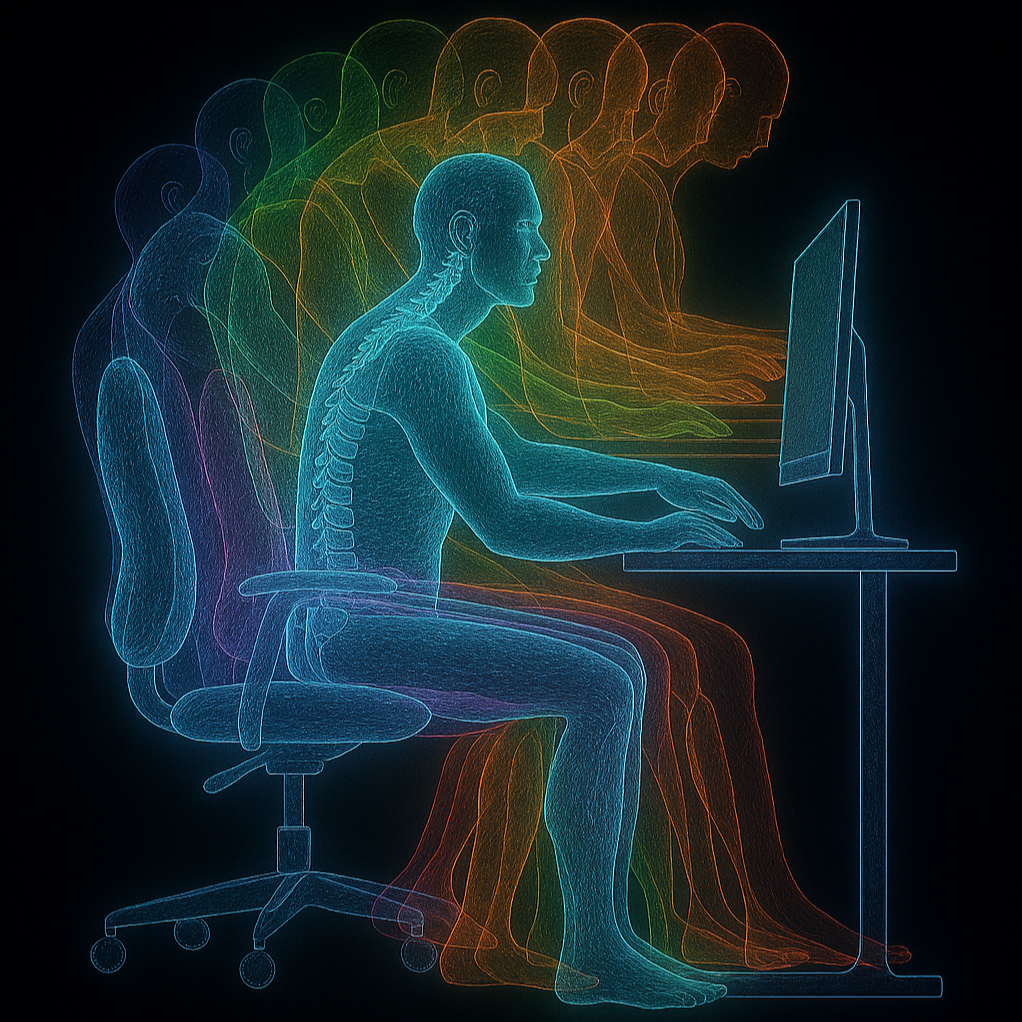

Create workspaces that support neutral postures, educate employees how to protect their bodies, empower them to be their own best advocate, and promote healthy movement through light stretching and dynamic posture strategies. Our goal is simple: help people work better, feel better, and stay healthier for the long run.
The Solution
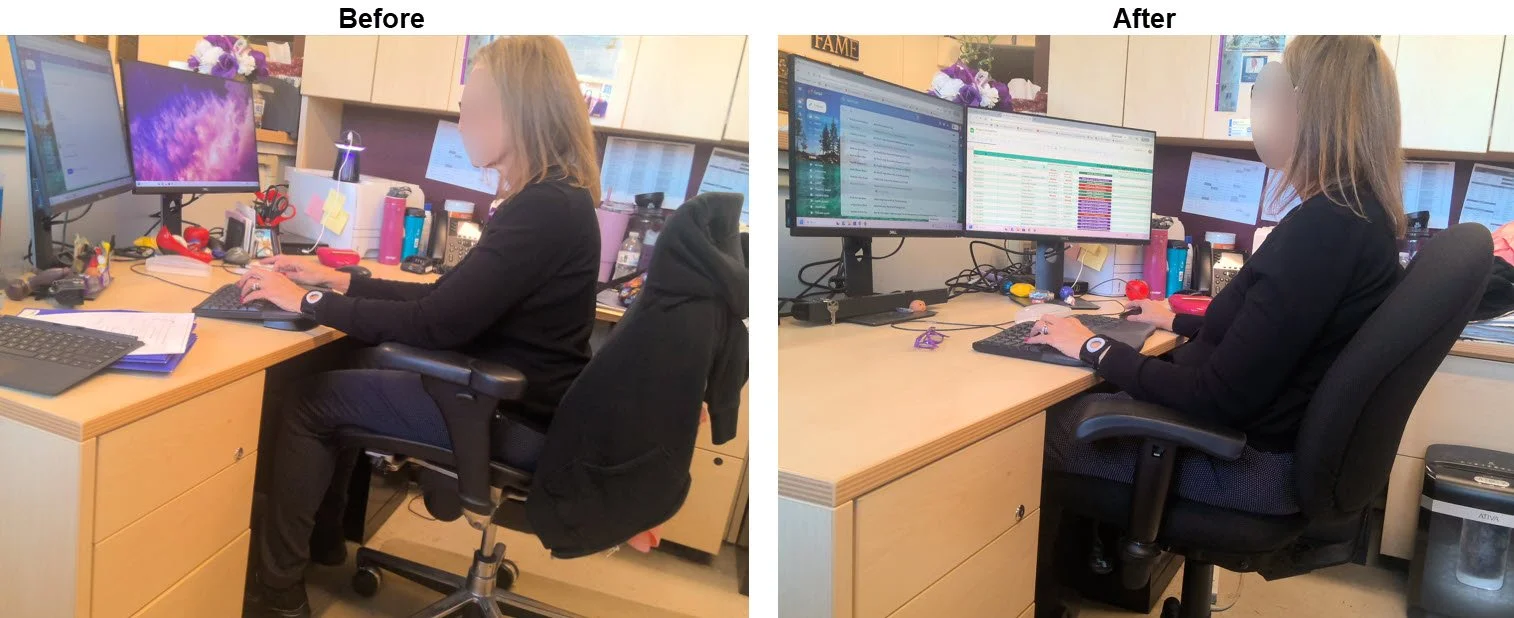
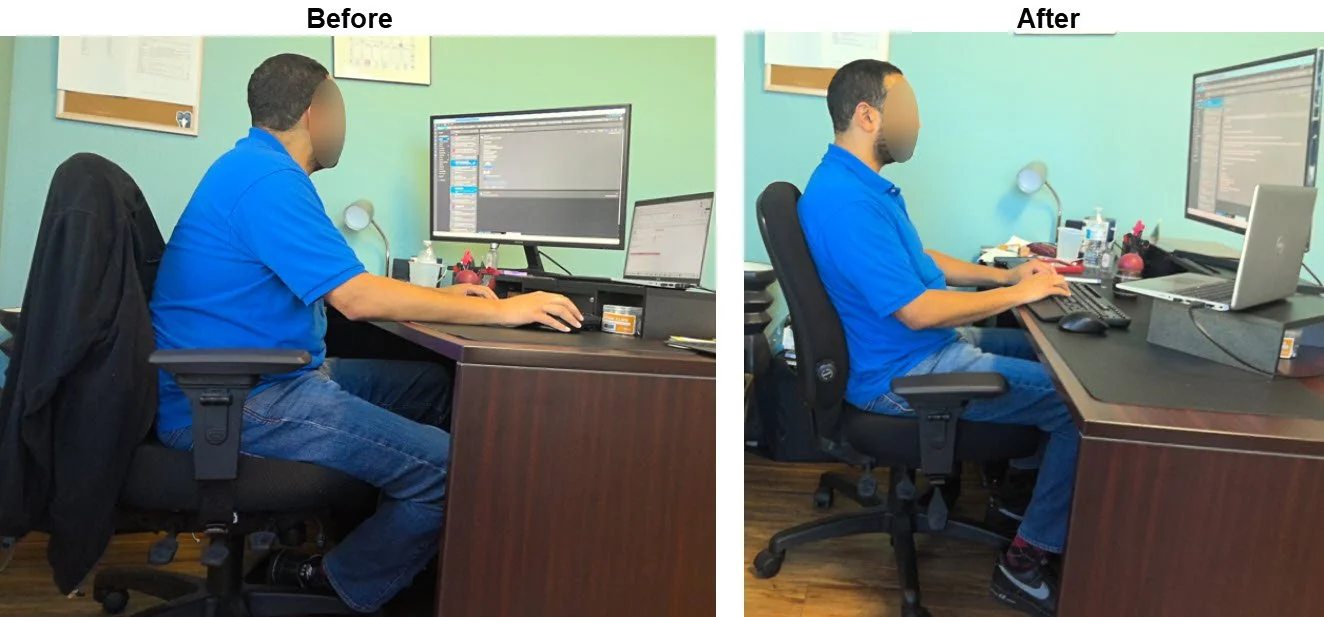
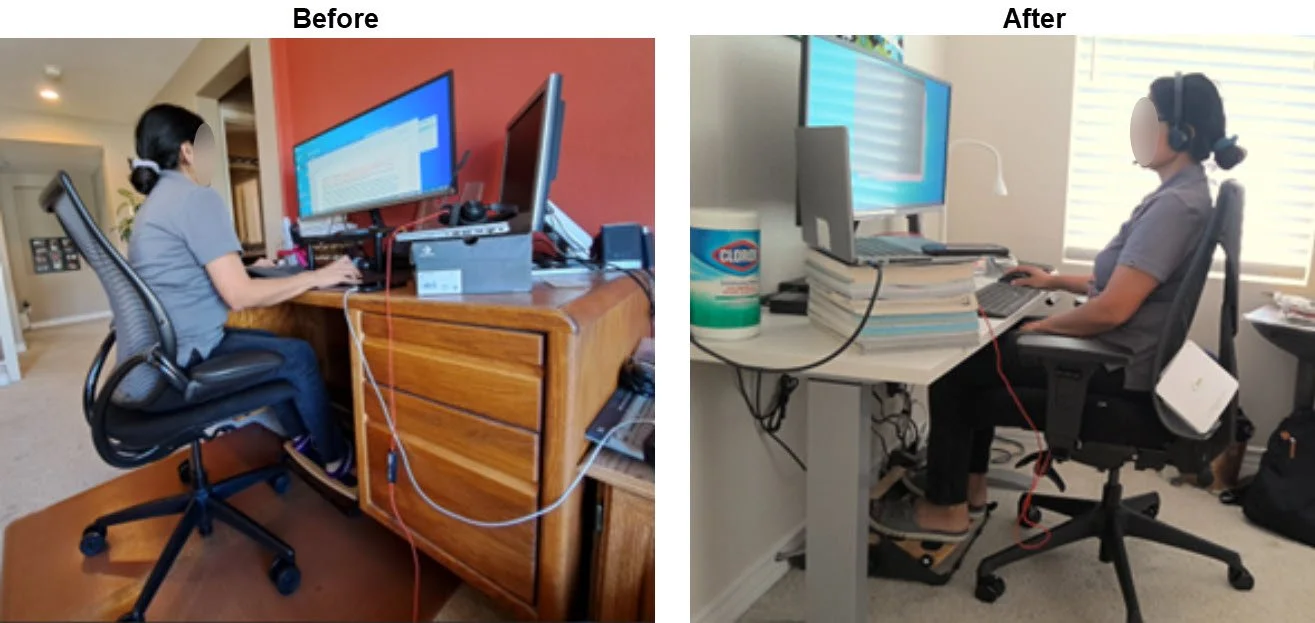
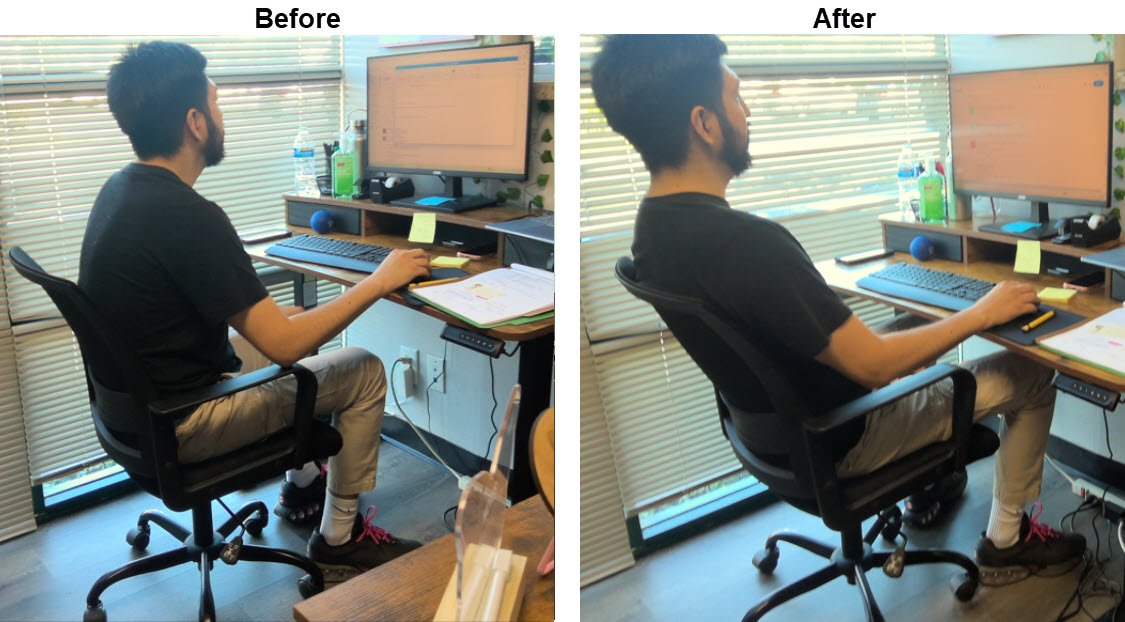
Ergonomics is all about fitting the job to the person, not forcing the person to fit the job.
It’s applying the understanding of the human anatomy and engineering controls to minimize injuries.
The energy otherwise lost to the ergonomic risk factors we get to keep for the more important things in life!